About acupuncture
Acupuncture is a widely practiced therapeutic modality with a long history of use throughout the world in many cultures. Licensed acupuncturists use very fine, sterile, single-use needles that are inserted superficially at specific points on the body. The goal of treatment is to support the body’s natural regulatory processes and overall balance. Acupuncture is generally considered low-risk when performed by a properly trained and licensed practitioner. It is commonly used alongside conventional medical care.
Over the past several decades in the United States, acupuncture has become increasingly integrated into a variety of healthcare settings. A growing body of peer-reviewed research has examined its use for a range of conditions, particularly pain-related concerns and stress-related symptoms. As with many healthcare interventions, researchers continue to study how it works and for whom it may be most helpful.
People seek acupuncture care for many reasons, including support with pain, stress management, sleep, mood, digestion, menstrual concerns, and general well-being. Acupuncture is typically delivered as a series of treatments, and frequency can be an important part of a care plan. Many practitioners observe that effects may build gradually over time, particularly for long-standing or chronic concerns.
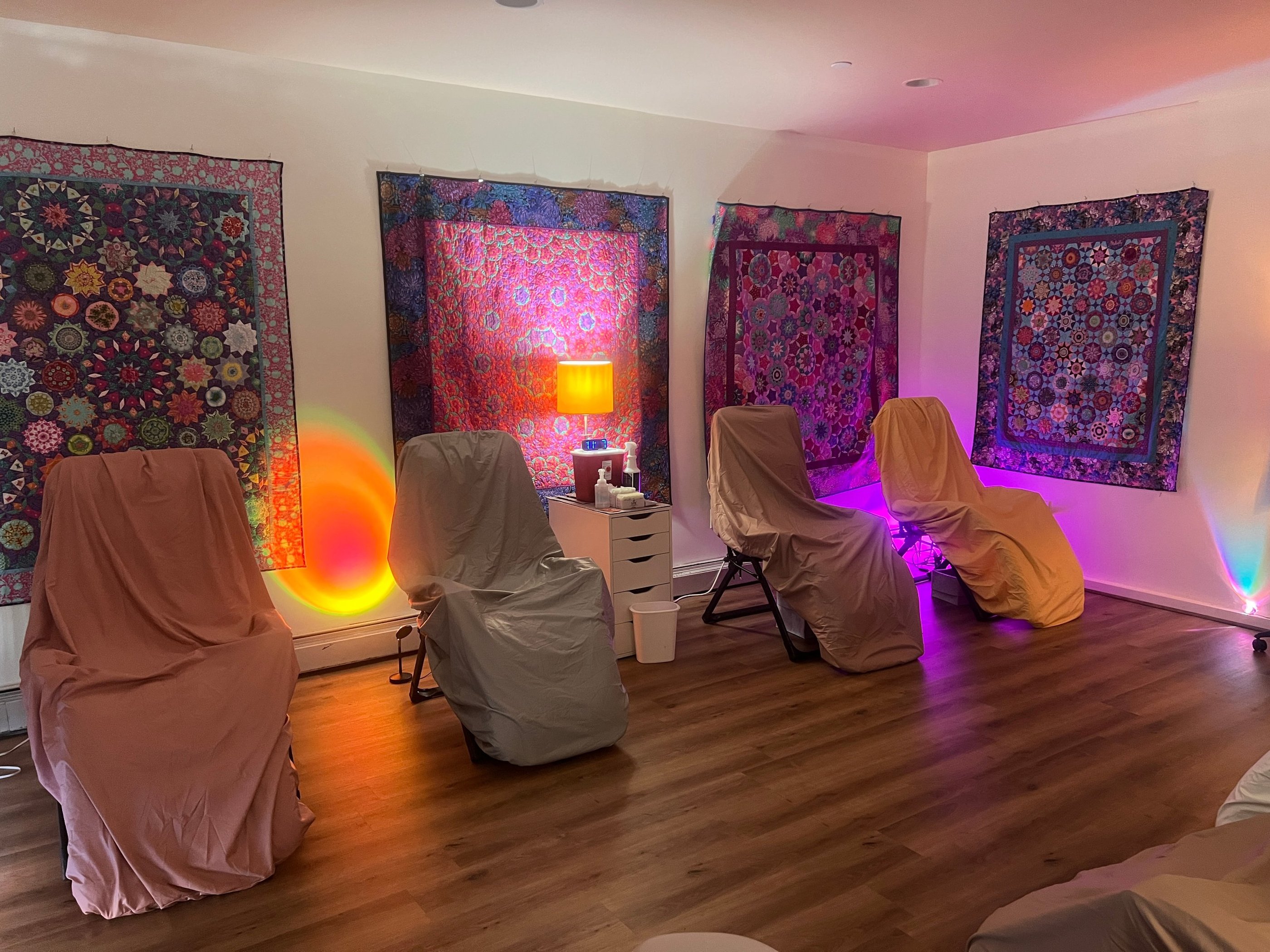
During treatment, it is common to feel deeply relaxed. Some people describe sensations of heaviness, warmth, tingling, or sleepiness. In our clinic’s community setting, you may find neighbors, coworkers, friends, and strangers resting quietly together. The shared space creates a calm, collective atmosphere where people can take time to pause, reset, and care for themselves.
What is community acupuncture?
Community acupuncture is a model of acupuncture care designed to make treatment accessible and affordable. It differs from the traditional private practice model primarily in its setting, cost structure, and priority of remaining equitable.
In a conventional private practice, treatments are typically provided one-on-one in a private room. Community acupuncture clinics, by contrast, provide treatments in a shared, group setting. Patients relax in comfortable reclining chairs rather than private treatment tables. This approach reduces overhead expenses and allows practitioners to treat several people at the same time, which helps keep costs lower per treatment. Although treatments take place in a shared space, each session is individually tailored. Patients remain fully clothed—usually just removing shoes and socks and rolling up sleeves or pant legs. Acupuncture points on the hands, feet, legs, arms, abdomen, and head are commonly used in this setting.
Community acupuncture is rooted in principles of accessibility, social equity, trauma-informed care, and community-based public health. By lowering the cost per visit, community acupuncture makes it more feasible for people to come as often as they feel is helpful for their individual goals and circumstances. This approach supports a practical, down-to-earth culture of care- one in which acupuncture is not viewed as a luxury experience, but as something that can be woven into everyday life. When treatments are costly, they can become occasional or “special-occasion” visits for people on tighter budgets. That kind of spacing may make it difficult to establish a steady rhythm of care. Acupuncture is traditionally delivered as a series of treatments, and many practitioners observe that changes often unfold gradually over time. Regular visits can allow the body space and consistency to adjust, rather than relying on a single session here and there.
While we love community acupuncture, some people may want or need a private setting.
We do not offer private room treatments at this time, sorry!
Why? Because it would greatly increase the price to provide 1:1 care, because we love seeing a full room of people resting together, and because the quality of care is not dependent on the amount of time we have together!
In the future we may consider having semi-private treatments available outside of regular clinic hours.
Private room treatments could be considered an accessibility accommodation - there is certainly a population of people that don't feel safe resting with a group of strangers. And that is OK! Community acupuncture works to be as accessible to as many people as possible, with specific boundaries and guidelines to make that possible. This will not be the right place for every person, and we acknowledge that you may desire or require care beyond our capacity; beyond the container of our community acupuncture practice. Here are some of the most notable differences between the two settings, for you to make a more educated decision for yourself.
Community Acupuncture Norms
Prices range nationally from $20-$80 per treatment
Clinics are often street-level and publicly visible
Patients stay clothed
Use of recliners and zero gravity chairs for treatment, massage tables on occasion
Needles are applied quickly, with minimal additional stimulation.
Often less focus on limiting your resting time in the clinic
Group setting, seated together in open rooms
Often needle-only treatment rather than incorporate other modalities
Sometimes sell herbal formulas (depends on clinic)
Traditionally do not make lifestyle or diet recommendations
No heat lamps
Treatments are based in Trauma Informed Care
Short, to-the-point health intake
Ease of same-day appointment often availability
Usually don't use back points at all
Collaborative: Patient and acupunk-turist work together
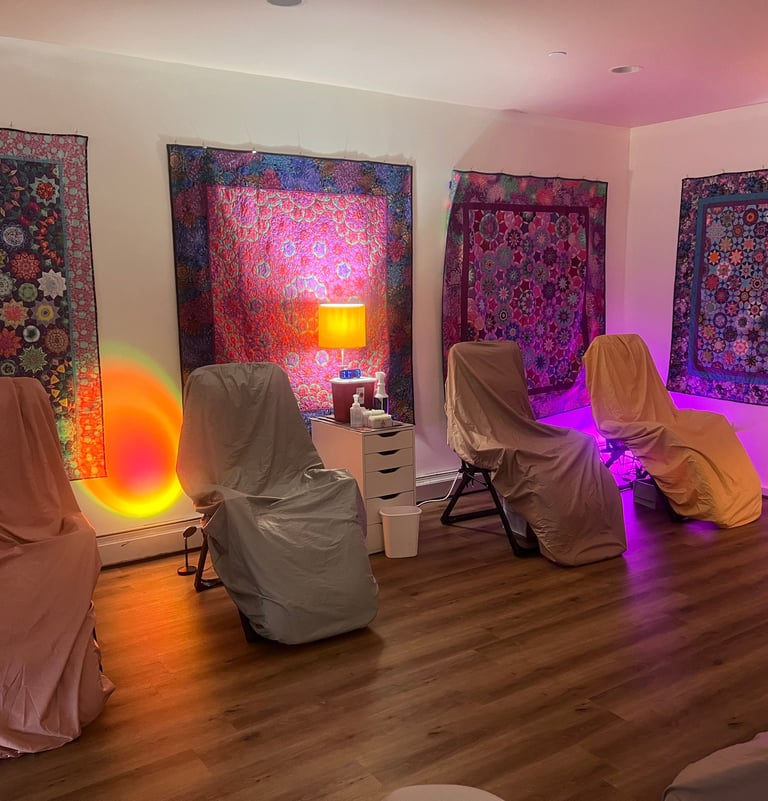
Clinic is usually furnished in a simple and cozy style - down to earth, living room type atmosphere
Private Room Norms
Prices that average from $100-$300 per treatment
Offices are often private
Allow, suggest, or require undressing
Standard use of massage tables for treatment
Practitioner has more time to manipulate and stimulate the needles.
Alone in private room, or diving curtains
More commonly use other Traditional Chinese Medicine
modalities: wet and dry cupping, moxa, gua sha
Sell and recommend herbal formulas more often
May recommend lifestyle, diet, or other health recommendations
Sometimes use heat lamps
May or may not practice Trauma Informed Care
Lengthy and in-depth health intake
Can be difficult or unable to book day-of
Utilize local points on the back
Often top-down, practitioner makes a "diagnosis" and dictates the terms
Office/Clinic setting can range from upscale setting, to spa atmosphere, to clinical/medical feel
Community Setting VS Private Room
This community clinic is a labor of love and expression of hope for our collective future. CGA wants to model what equitable everyday care can look like, and inspire other wellness practitioners (especially acupuncturists) to consider following suit-- however they are able to create more accessible, equitable treatments within their practices.
This project began in 2020 with visioning, studying, researching, writing, crafting, saving, shopping, filling out paperwork, and endlessly scheming plans. The primary acupuncturist, Arielle, has put her whole heart and even some blood sweat and tears into creating this clinic- a place to experience the healing power of community acupuncture.
Common Good Acupuncture is a PLLC. It does not receive state, national, public or private funding. CGA does not have shareholders or investors. The clinic operates solely off of payments from treating patients, occasional workshops, and a small selection of wellness items for sale.
CGA welcomes windfalls of money in the form of grants and gifts. With excess funds, we'd like to initiate community acupuncture pop-ups, frequent free treatment days, individual free treatment passes, and special community events.
More than anything else we would love your attendance at the clinic, so that you can offer a genuine recommendation to everyone you know!
We are interested in connecting with local health care providers, medical clinics, corporate wellness programs, community efforts & establishments, support groups, and mutual aid groups. We gladly accept referrals -- If you would like to offer our business card to your patrons, please stop by in person to grab some, or contact us if you would like more than 20 cards.
We currently have limited availability for off-site private pop-up group acupuncture offerings and private wellness events from 4-30 people. Email us to inquire
CGA is proudly modeled after the Working Class Acupuncture clinic in Portland, Oregon. We will soon become a member of the POCA Co-Op, which supports and furthers the cause of affordable acupuncture and loosely affiliates us with other community acupuncture clinics across the country.
Affiliations
Resident AcuPunk & Clinic Owner
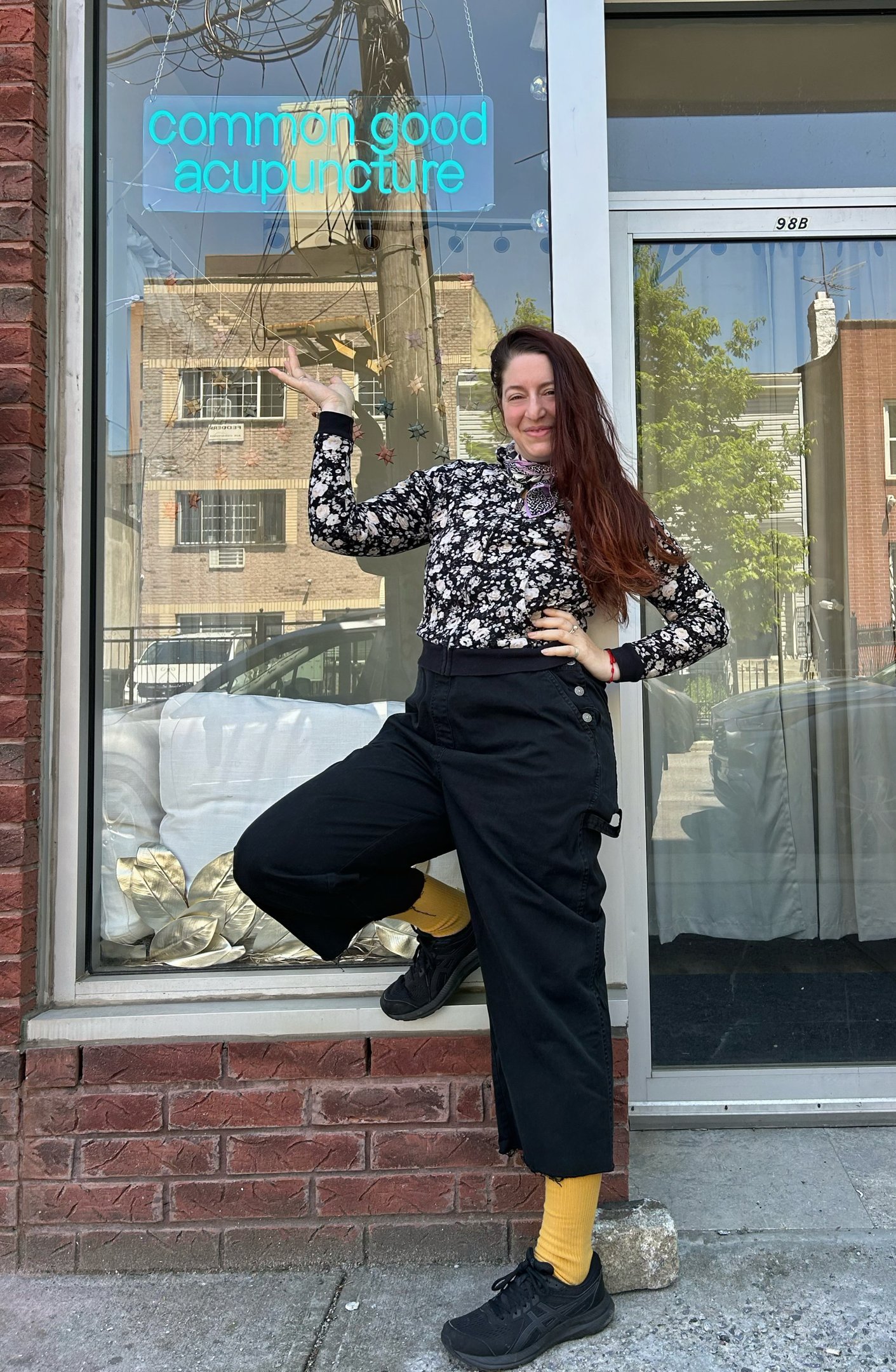
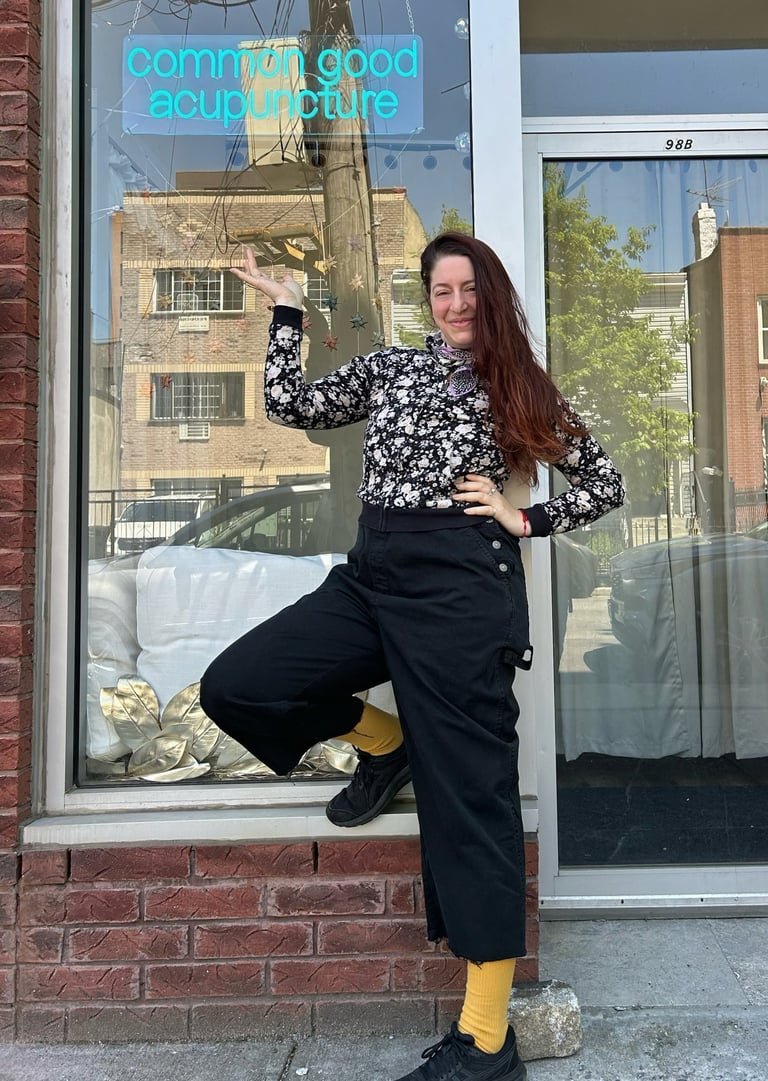
Arielle (they/she)
Licensed Acupuncturist (L.Ac) in the State of New York
About
Arielle pursued a career in acupuncture because of its enormous range of applications, while remaining a poetic, simple, cheap health intervention. Leading with curiosity and a nonjudgmental agenda for collaboration, she is a technique nerd and enjoys trying different approaches to acupuncture. She believes affordable acupuncture has wide-scale potential to change lives for the better.
Ari proudly comes from a lineage of women whose primary work tools feature scissors and needles. Previous to acupuncture, she spent 10 years as a creative freelancer in NYC and remains to be a life-long artist of many mediums: Textiles, costume & apparel, ceramics, jewelry, painting, graphic design, and sculpture. Her favorite things are learning, the ocean, Italian pastry, humor, time with friends in the sun, rummage sales, and clothing swaps.
Education
Oregon College of Community Acupuncture, Master's Certificate, 2025
Portland, Oregon
Portland Community College, CE
Portland, Oregon
Community College of Rhode Island, CE
Warwick, RI
Rhode Island School of Design, BFA Printmaking, 2010
Providence, RI

Visiting AcuPunk
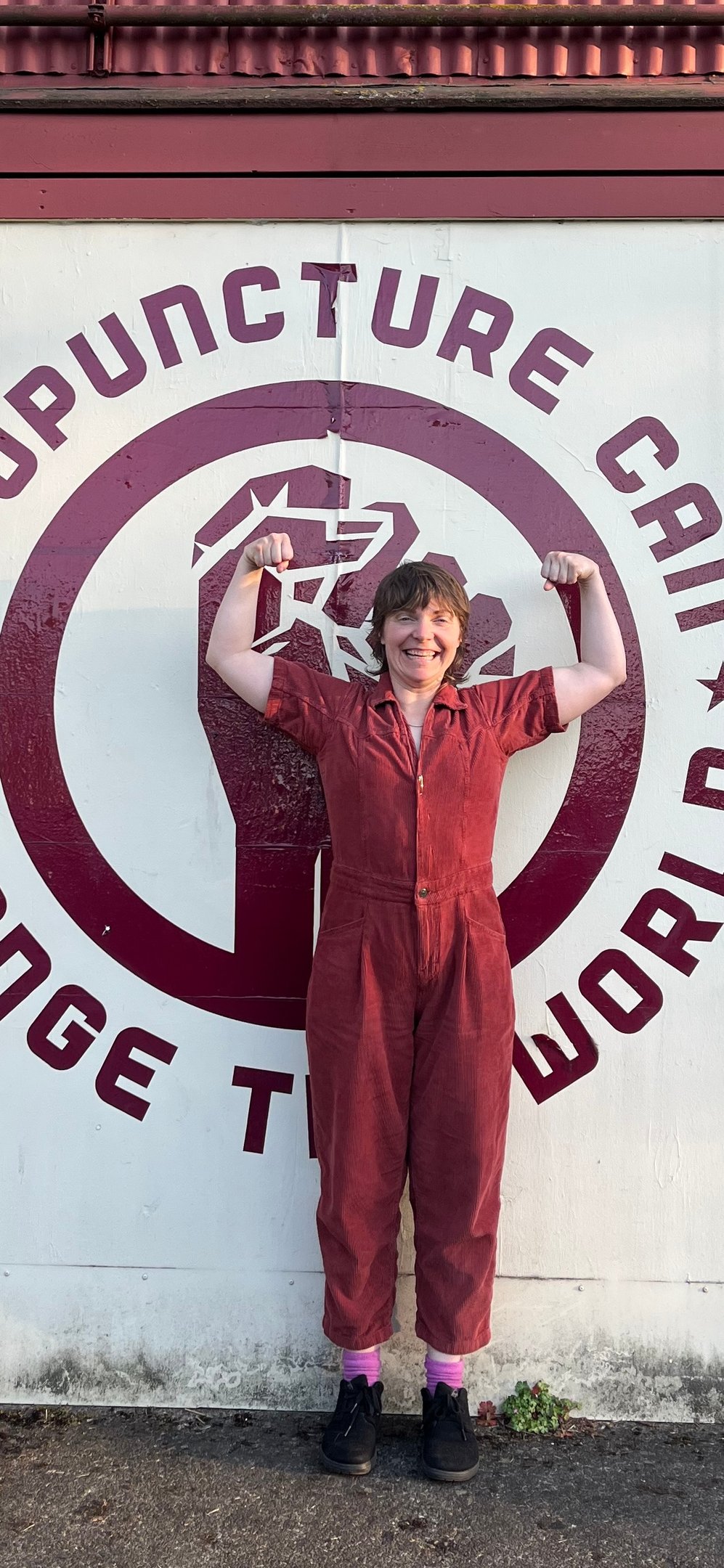
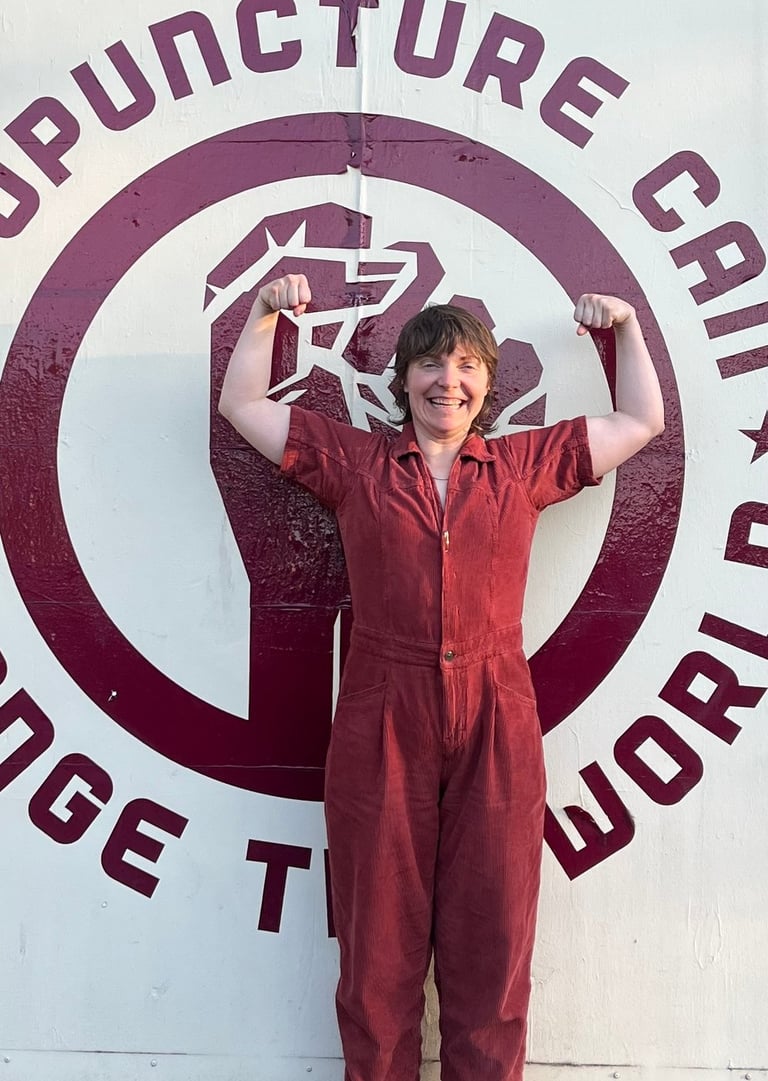
Rae (they/she)
convergenceacupuncture@gmail.com
Licensed Acupuncturist (L.Ac) in the State of New York
Licensed Massage Therapist in the State of Oregon
Naturopathic Doctor
About
After years of focusing on integrative bodywork, Rae shifted her lens to community acupuncture. She believes medicine should be accessible and informed by a whole person approach. Her work has always been hands-on, finding options for those who would otherwise slip through the cracks of the medical system. She believes in preventative treatments and consistent healing, rather than emergency and urgent care.
Growing up in the woods of the Hudson Valley, Rae has always had a reverence for quiet places. Massage therapy allowed her an avenue to work within this meditative peace and to stay in connection with her own body. Herbal medicine allowed her to find collaboration with nature. While on the job she considers herself a contemplative, collaborative detective of sorts, adept with her hands.
She is a poet and artist and plays many musical instruments. Her latest passion is learning to play the drums.
Education
Oregon College of Community Acupuncture, Master's Certificate, 2025
Portland, Oregon
Bastyr University
Doctor of Naturopathic Medicine, 2020
Kenmore, Washington
SUNY Purchase College, BA
Creative Writing, 2010
Location
98b Suydam Street
Brooklyn, NY 11221
All artwork is © Common Good Community Acupuncture 2023-2026.
Please credit us with a link or email for permission of any purpose use
Current Clinic Hours
Monday & Tuesday 12pm-7pm
Wednesday & Friday 1pm-6pm
Thursday & Saturday 10:30am-3:30pm
Sunday - Closed
May hours vary, check the calendar via our scheduler